


Handheld Laser Welding vs TIG – A Practical Comparison for Small Shops in 2026
Release time:
2026-04-23
For years, TIG (tungsten inert gas) welding has been the go-to method for precision metal joining in small workshops, automotive repair shops, and fabrication businesses. It delivers clean, controlled welds on materials like stainless steel and aluminum, but it comes with a steep learning curve and significant heat input that often leads to warping on thin materials.
For years, TIG (tungsten inert gas) welding has been the go-to method for precision metal joining in small workshops, automotive repair shops, and fabrication businesses. It delivers clean, controlled welds on materials like stainless steel and aluminum, but it comes with a steep learning curve and significant heat input that often leads to warping on thin materials.
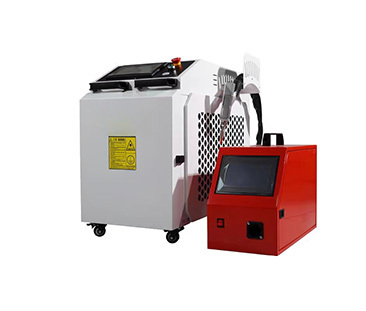
Enter handheld laser welding technology. In 2026, the conversation is no longer about whether laser welding is “the future”—it’s about whether small shops can afford to wait any longer to adopt it. With entry-level portable laser welders now available at a fraction of the cost from just a few years ago, the economics have shifted dramatically in favor of laser technology for small-scale operations.
The Real Cost Picture
A common misconception is that laser welding is prohibitively expensive for small businesses. While a high-quality handheld fiber laser welder still requires a larger upfront investment than a standard TIG inverter—typically ranging from $6,000 to $12,000 for professional-grade units compared to $1,000–$3,000 for a good TIG setup—the total cost of ownership tells a different story.
Consider the long-term savings. TIG welding requires filler rods, argon gas cylinders, tungsten electrodes, and ongoing consumable replacement. Handheld laser welding eliminates most of these recurring expenses. The only significant consumable is electricity, and the welding speed can be up to ten times faster than TIG, especially on thin materials. For a small shop running eight hours a day, that speed differential translates directly into revenue.
Speed and Learning Curve
Perhaps the most compelling advantage for small business owners is how quickly an operator can become productive with a handheld laser welder. Traditional TIG welding can take months or even years to master. A skilled TIG welder commands premium wages, and finding one is increasingly difficult. In contrast, many shop owners report that workers with zero welding experience are hitting production-ready quality within the same week.
The learning curve is often described as similar to using a hot glue gun—point, pull the trigger, and follow the seam. Of course, achieving perfect welds still requires practice, but the barrier to entry is dramatically lower.
Application Spotlight: Exhaust Pipe and Muffler Repair
For automotive repair shops and custom fabrication businesses, stainless steel exhaust systems represent a high-volume, high-margin opportunity. Traditional TIG welding on exhaust pipes requires meticulous technique to prevent burn-through on thin-gauge stainless, and the heat-affected zone often leaves discoloration that requires additional finishing.
A portable laser welder changes the game entirely. The highly concentrated heat source minimizes distortion and virtually eliminates spatter, producing clean, consistent welds that often require no post-processing. For exhaust manifold repairs and custom header fabrication, the precision of a laser welder allows for 0.1mm beam accuracy, which is essential for high-stress components.
One Spanish stainless steel manufacturer switched from traditional arc welding to a handheld laser welding system and immediately saw faster setups, better weld quality, and a cleaner shop environment. Similar results are being reported by muffler shops across North America and Europe.
The Aluminum Advantage
Laser welding truly shines when working with aluminum. TIG welding aluminum requires AC balance adjustment, specialized filler rods, and significant skill to manage the oxide layer. Handheld fiber laser welders cut through the oxide layer effortlessly, producing strong, porosity-free welds at speeds that leave TIG in the dust. For shops fabricating aluminum fuel tanks, intercooler piping, or custom marine components, this capability alone can justify the investment.
What About Traditional Welding Methods?
This is not to say TIG welding will disappear overnight. For heavy plate work over 8mm thick, for certain exotic alloys, and for applications where ultimate weld strength testing is required, traditional methods still have their place. Many small shops find the optimal solution is to keep one TIG setup as a backup while making laser welding their primary production tool. The two technologies can coexist quite effectively.
Why Shops Are Making the Switch in 2026
The handheld laser welding segment is the fastest-growing category within the global laser welding equipment market. According to QYResearch, the global handheld laser welding machine market was valued at $626 million in 2025 and is projected to reach $2.53 billion by 2032, representing a compound annual growth rate (CAGR) of 22.4%. This rapid adoption is being driven by small shops and automotive repair businesses worldwide.
Driving this adoption are three key factors:
First, price accessibility. Five or six years ago, a handheld laser welder could cost $50,000 to $80,000—an impossible investment for a small shop. Today, that same capability is available at a fraction of the price.
Second, labor dynamics. Finding skilled TIG welders has become increasingly difficult and expensive. Laser welding allows shops to train existing staff quickly and bring in new hires who can become productive immediately.
Third, customer expectations. End users have come to expect the clean, precise finish that laser welding delivers. In competitive markets like custom automotive fabrication or architectural metalwork, offering laser-welded quality has become a competitive necessity.
Practical Advice for Shop Owners
If you are considering adding a laser welder to your shop, here is what experienced users recommend:
Start with a 1000W or 1500W air-cooled handheld unit—sufficient for most thin to medium-gauge work including exhaust systems, sheet metal fabrication, and general repair. Ensure the machine offers adjustable spot size and pulse shaping capabilities for different materials. Budget for proper safety equipment including laser safety glasses rated for your machine’s wavelength. Factor in training time: plan for one week of supervised practice before letting operators work independently on customer jobs.
Conclusion
Handheld laser welding has evolved from a niche industrial technology to an accessible productivity tool for small shops, automotive repair businesses, and independent fabricators. The combination of lower prices, faster operation, minimal training requirements, and reduced consumable costs makes 2026 the ideal time to evaluate this technology for your operation.
For businesses looking to stay competitive in an increasingly demanding market, the question is no longer “Can I afford a laser welder?” but rather “Can I afford not to have one?”
Action Guide for Businesses and Small Shops
How can your shop take advantage of this technology shift? Start by auditing your current welding workload. Calculate how many hours per week are spent on TIG welding thin materials—this is where laser offers the greatest speed advantage. Contact Udibo for a no-obligation consultation to determine which power level suits your typical applications. Many shops find that a single handheld laser welder can replace two to three TIG stations in terms of output, dramatically improving throughput without adding headcount.
For more details and a free quote, please visit our official website at www.udibomfg.com or contact us via email at info@udibomfg.com.
- All
- Product Management
- News
- Introduction
- Enterprise outlets
- FAQ
- Enterprise Video
- Enterprise Atlas
Recommend News




Contact Us
Phone: +86 (China) 152-5267-7152
WhatsApp: +86 (China) 152-5267-7152
E-mail:info@udibomfg.com
Address: Building 1002 Redstar International Technology Park, Mudu Town, Wuzhong District, Suzhou City, Jiangsu Province, China