

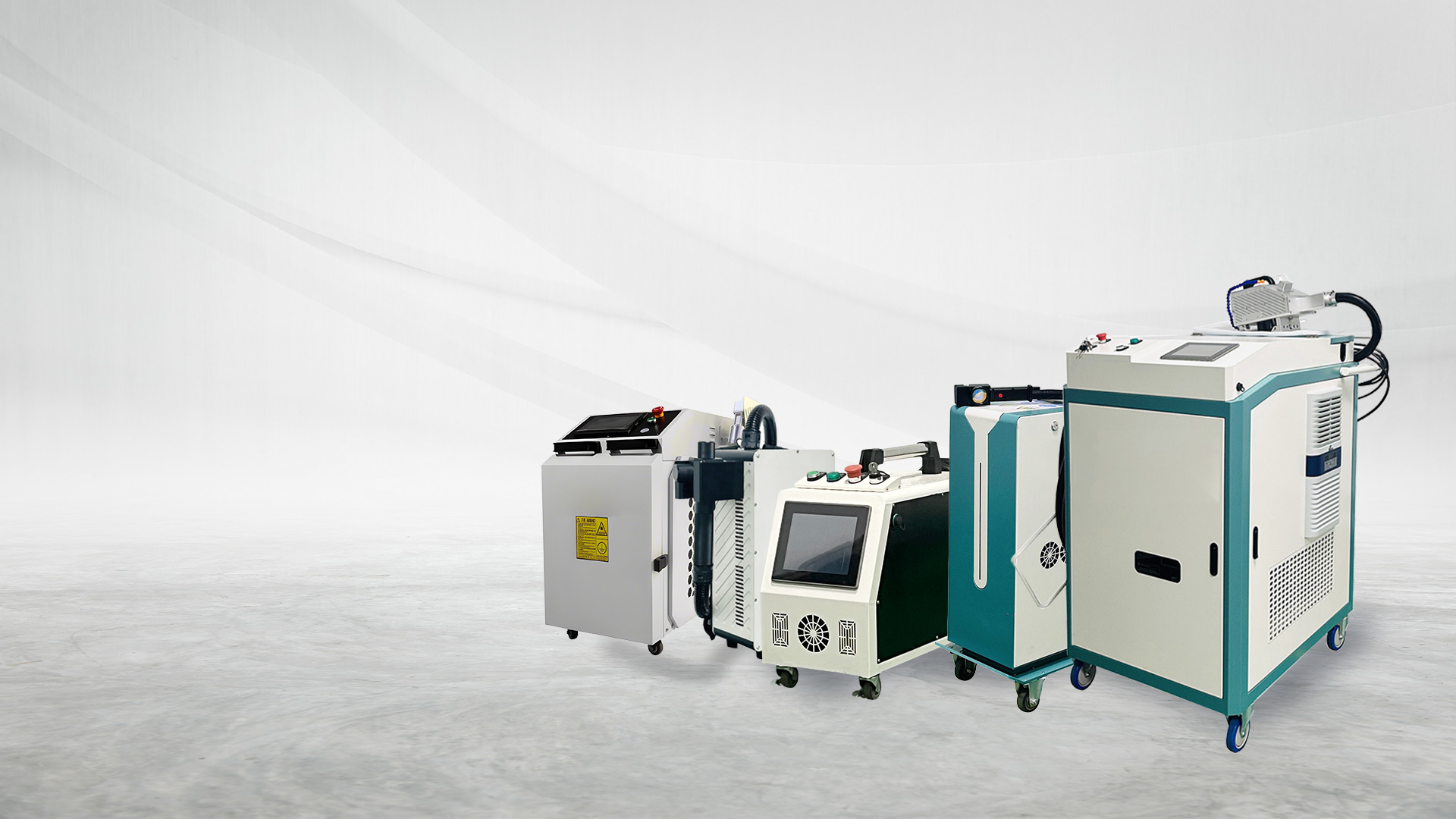
The laser cleaning machine has the characteristics of non-contact, good cleaning effect, environmental protection and non-pollution, flexible operation, automated integration, and small damage to the material, which is widely used in metal processing, cultural relics surface cleaning, electronic manufacturing, aerospace, mould cleaning and many other fields.

Laser welding machine with high energy density, high quality and precision, clean and environmentally friendly, high flexibility, widely used in automotive manufacturing, electronics and electrical appliances, aerospace, medical equipment, hardware kitchen and bathroom, shipbuilding, new energy and other fields.
Laser Marking Machine (Fiber/UV/C02)
Laser marking machine processing speed, high precision marking, non-contact processing, permanent marking, widely used in all kinds of metal, wood, leather, paper, fabric pattern marking, toys, packaging, industry Keli, glass, water products, ceramic surface marking.

Permanent Marks on Pipes and Profiles: Building Product Makers Rethink Identification
Walk through a small extrusion or window-fabrication plant, and the identification problem is not hard to spot. Batch codes are printed on PVC pipe, adhesive labels go on aluminium profiles, and valve bodies carry stamped numbers — all of it has to survive cutting, handling and outdoor storage. Ink fades. Labels peel. Stamping deforms thin-wall sections. The shift toward permanent identification is less a technology trend than a response to complaints from distributors and installers.
2026/11/05
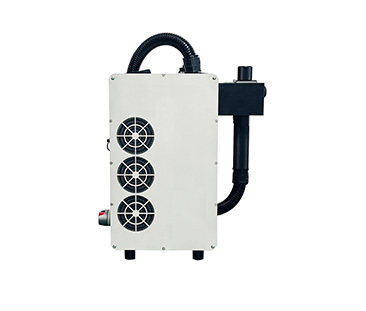
Backpack Laser Cleaning Gains Ground in Lithium-Ion Battery and Electronics Manufacturing
Over the past two years, cell and pack assemblers have quietly changed how battery enclosures, busbars and weld seams are prepared. Solvent baths and wet wipes are losing ground. The reason is practical, not ideological: lithium-ion packs do not tolerate moisture near live cells. A dry, contact-free method is now appearing on production floors and in field-service vans. In many cases, a backpack laser cleaning machine is what carries it there. For plants commissioning new lines, the appeal is immediate: no solvent storage permits, no drying racks, and no flammable liquid sitting next to cells.
2026/11/02

Why Automated Laser Welding Is Reshaping Electronics and Hardware Production Lines
Order volumes climb and tolerances tighten. Shops that once relied on TIG benches and resistance spot welders are now rethinking how they join parts. In electronics modules and hardware fabrication alike, the bottleneck is no longer raw throughput — it is consistency at production scale. That reality is pushing automated laser welding from a premium option into a standard line tool on the shop floor.
2026/10/22

UV Laser Marking Quietly Reshapes Small Hardware and Custom-Goods Workshops
Small hardware fabricators and independent makers have seen clear changes across their workshop floors these last few years. Operators once relied on inkjet coders, etched stickers, or outsourced engraving services. Today, more of them bring a bench-top UV laser marking machine in-house. No single benefit drives this switch; it comes from a bundle of practical advantages. A single unit can produce legible, permanent markings on both metal and non-metal substrates. No ink refills are needed, and there is zero physical contact that could damage workpiece surfaces.
2026/10/19

Handheld Pulsed Laser Cleaning Finds a Firmer Footing in Ship Repair and Marine Upkeep
For decades, stripping rust, mill scale, and failed coatings from steel hull plating was handled with grit blasting or angle grinding. Both methods kick up large volumes of dust, burn through high volumes of consumables, and very often extend a vessel's drydock stay. Quiet change is unfolding across coastal repair yards. Handheld laser cleaning units are now being picked up by field crews as a practical work alternative. This shift is not driven by marketing slogans — real‑world performance is what matters. A pulsed laser head paired with a wheeled power source can remove corrosion from hatch coamings or weld seams. No sand, no solvent, and no large containment tents required for blasting work. Portable laser units are now listed as standard marine‑grade offerings from multiple equipment manufacturers. This signals that the technology has moved well beyond experimental trials.
2026/10/16
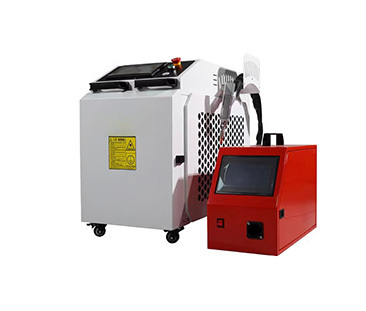
Water‑Cooled Handheld Laser Welding Quietly Changes the Hardware and Sheet Metal Shop Floor
For decades, hardware and sheet metal fabricators had to work within well‑known trade‑offs. TIG welding delivered clean welds, yet it required highly skilled operators and low travel speeds. MIG welding boosted throughput, but significant heat was transferred into workpieces. This led to greater part distortion and extra grinding work after welding. A new generation of water‑cooled handheld laser welding machine, rated from 1000W to 3000W, removes those old compromises for small‑scale operators. Powered by standard 220V or 380V input and mounted on a mobile cart, repeatable weld seams can be produced by single‑person operations. No dedicated welding booth or gas cylinder rack is required. Rising order volumes are being reported by distributors from small fabricators that previously outsourced all laser processing work. Bringing this capability in‑house often delivers payback within several months.
2026/10/15

The Portable Marking Shift: How Handheld Lasers Are Changing Small‑Batch Identification
For years, applying a permanent ID to a component came down to two common choices. You could stick on adhesive labels that will eventually peel off over time, or purchase a benchtop marking unit and bring all your workpieces to the machine. Today, hardware retail shops, sheet‑metal fabrication workshops and craft‑focused businesses have adopted a practical third option. Workpieces no longer need to be moved; a handheld fiber laser marking machine can be brought directly to them.
2026/10/14

Flying Fiber Laser Marking on Production Lines: What Manufacturers Are Asking for in 2026
Production lines are operating at increasingly faster speeds, while industrial traceability regulations grow stricter by the year. For most manufacturing plants, the traditional workflow of pausing conveyor belts, marking parts and resuming operation is no longer efficient or viable. This is the core reason why inline flying laser marking has evolved from a niche auxiliary process to a standard mandatory solution across multiple industrial sectors. This industry shift is not exclusive to large-scale manufacturing factories. Small and mid-sized metal processing workshops, packaging enterprises and electronic assembly plants are also actively adopting flying fiber laser marking systems. The core demand is simple: boost hourly marking output significantly without adding extra production shifts or manual labor costs.
2026/10/09
- All
- Product Management
- News
- Introduction
- Enterprise outlets
- FAQ
- Enterprise Video
- Enterprise Atlas
Recommend News

Contact Us
Phone: +86 (China) 152-5267-7152
WhatsApp: +86 (China) 152-5267-7152
E-mail:info@udibomfg.com
Address: Building 1002 Redstar International Technology Park, Mudu Town, Wuzhong District, Suzhou City, Jiangsu Province, China