

Handheld Laser Welding Machine in Modern Auto Repair
Release time:
2026-05-29
The global automotive aftermarket is undergoing a quiet transformation. Repair shops are shifting from conventional TIG and MIG welding toward handheld laser welding machine to handle jobs ranging from exhaust system repairs to aluminum body panel restoration. According to industry data, the global laser welding systems market is projected to surpass $8 billion by 2032, while workshops equipped with portable laser welders are reporting cycle times approximately 43% faster compared to traditional methods. For small and medium-sized auto repair businesses, the shift is not merely about speed—it is about delivering cleaner welds with less rework, lower energy consumption, and reduced post-processing labor.
The global automotive aftermarket is undergoing a quiet transformation. Repair shops are shifting from conventional TIG and MIG welding toward handheld laser welding machine to handle jobs ranging from exhaust system repairs to aluminum body panel restoration. According to industry data, the global laser welding systems market is projected to surpass $8 billion by 2032, while workshops equipped with portable laser welders are reporting cycle times approximately 43% faster compared to traditional methods. For small and medium-sized auto repair businesses, the shift is not merely about speed—it is about delivering cleaner welds with less rework, lower energy consumption, and reduced post-processing labor.
This article examines how Udibo‘s water-cooled portable fiber laser welding machine is helping auto repair workshops increase productivity, handle multi-material jobs, and stay competitive in an evolving market. Drawing on real-world applications from collision repair centers to mobile maintenance services, we explore why handheld fiber laser welding has become an essential addition to the modern automotive repair toolkit.

The Technology Driving Change
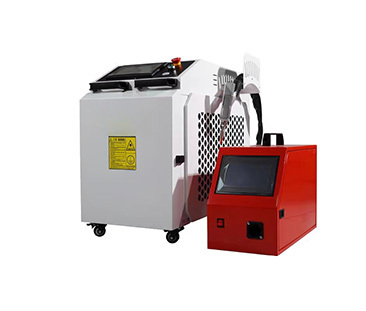
Traditional arc welding generates significant heat input, causing distortion on thin automotive materials like aluminum body panels. Laser welding, by contrast, delivers concentrated energy that melts only the joint area. The result: narrow, smooth weld beads and minimal heat-affected zones. For repair shops, this means no more secondary grinding after each weld. In the field of laser welding auto repair, Udibo‘s UDUH-SCLMF-21500 water-cooled handheld laser welding machine operates with continuous laser mode, producing smooth weld transitions without fish scale patterns. The weld surface is small and requires no secondary grinding—directly reducing labor hours and consumable costs.
One of the most cited advantages from early adopters is the reduction in rework. A workshop owner in Australia recently reported that switching to an automotive laser welder cut rework rates by nearly two-thirds compared to their previous MIG setup. For collision repair shops juggling tight insurance deadlines, fewer rework cycles translate directly into higher throughput and improved client satisfaction.
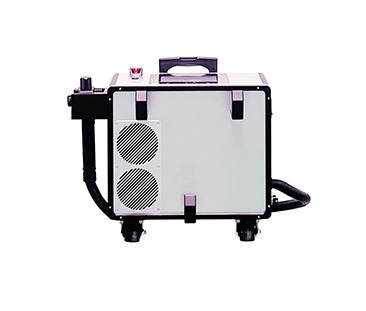
Available in 1000W, 1500W, and 2000W configurations, this metal laser welder handles stainless steel, carbon steel, aluminum, copper, and even dissimilar metals. The handheld welding head connects via a flexible 10-meter fiber cable, allowing operators to reach confined undercarriage and engine bay locations that conventional torches cannot access. This flexibility is especially valuable for mobile repair services and workshops with limited space.

Real-World Impact in Auto Repair Shops
Beyond collision repairs, handheld laser welding machines are proving useful across multiple automotive applications. Exhaust system fabrication requires thin-wall stainless steel welding where traditional methods often cause burn-through or warping. Laser welding delivers consistent penetration with minimal distortion. The same applies to custom intake manifolds, turbocharger piping, and roll cages—applications where weld quality directly affects vehicle safety and performance.
The machine’s 0.5–6 mm welding thickness range covers most automotive repair needs. The continuous or modulated working mode allows operators to fine-tune parameters for different materials and thicknesses. Optional attachments—including rotary welding heads for circular joints and CCD camera monitoring systems for precision positioning—further expand the range of jobs a single workshop can handle.
A repair shop in Indonesia that serves both automotive and light industrial clients found that integrating a handheld laser welding machine reduced total job completion time by approximately 40% across routine welding tasks. The shop’s owner noted that the ability to weld directly in position—without moving heavy parts to a dedicated welding station—was the most valuable operational improvement.
Meeting the Needs of Small Workshops and Mobile Operations
For small auto repair shops and individual welders, capital equipment investments must deliver measurable returns. The UDUH-SCLMF-21500’s all-in-one design requires no complex external chiller setup. The water-cooling system maintains stable operation during extended welding cycles, while power tunability from 10–99% allows precise heat input control on thin materials. With a compact footprint (65×30×63 cm for the 1000–1500W unit), the machine fits easily into crowded workshop layouts.
Mobile repair operations also benefit from the machine’s integrated design. A single technician can load the unit into a service vehicle and perform on-site welds for customers with urgent turnaround needs. For businesses serving agricultural or transportation fleets, this mobility translates into reduced vehicle downtime and fewer lost revenue days.
Why This Transition Matters
From an environmental perspective, laser welding eliminates the need for filler rods in most applications, reduces argon gas consumption, and generates no smoke or fume emissions that require costly extraction systems. These features align with tightening environmental standards in European and North American markets, while also lowering operational expenses for shop owners.
As the automotive industry continues its long-term shift toward lightweight materials and electric vehicles, the demand for precision welding without heat distortion will only increase. Repair shops that adopt handheld laser welding technology early position themselves to serve a wider range of modern vehicles—aluminum-intensive EVs, hybrid battery casings, and lightweight chassis components.
For small businesses, the decision to invest in a handheld laser welding machine is no longer a question of “if” but “when.” The efficiency gains are well documented. The learning curve is short enough for experienced welders to become proficient within days. And with proper maintenance, these machines deliver years of reliable service at a fraction of the operating cost of traditional welding setups.
Frequently Asked Questions
Q: How much training does an experienced welder need to use a handheld laser welding machine?
A: Most experienced welders become proficient within two to three days of hands-on practice. The intuitive handheld design and adjustable settings make the transition straightforward for anyone familiar with basic welding principles.
Q: Can this machine weld aluminum auto body panels without burning through?
A: Yes, with proper parameter adjustment. The continuous wave mode and precise power control allow operators to weld thin aluminum panels without distortion or burn-through. Start with lower power settings and perform test welds on scrap material of the same thickness.
Q: What maintenance does the water-cooled system require?
A: The water-cooling system requires periodic coolant level checks and replacement according to the manufacturer’s schedule. Basic maintenance also includes cleaning the protective glass window and inspecting fiber connections. Udibo provides comprehensive technical support for all maintenance procedures.
Contact Information
Udibo Industrial Machinery Co., Ltd.
Suzhou Industrial Park, Jiangsu, China
Phone/WhatsApp: +86 152 5267 7152
Email: info@udibomfg.com
Website: www.udibomfg.com
© 2026 Udibo Industrial Machinery Co., Ltd. All Rights Reserved
Specialists in Laser Marking, Welding, Cleaning and Cutting Equipment
Key words:
- All
- Product Management
- News
- Introduction
- Enterprise outlets
- FAQ
- Enterprise Video
- Enterprise Atlas
Recommend News



Contact Us
Phone: +86 (China) 152-5267-7152
WhatsApp: +86 (China) 152-5267-7152
E-mail:info@udibomfg.com
Address: Building 1002 Redstar International Technology Park, Mudu Town, Wuzhong District, Suzhou City, Jiangsu Province, China