

How Pulsed Laser Cleaning Is Transforming Automotive Repair in 2026: A Chemical-Free Solution for Shops of Any Size
Release time:
2026-06-16
The global automotive aftermarket is under pressure. Across Europe and North America, stricter environmental regulations are phasing out toxic chemical solvents, abrasive blasting media, and hazardous waste streams that have long been standard in repair shops. At the same time, vehicle manufacturers are using more aluminum, composites, and lightweight alloys—materials that traditional grinding discs and sandblasting easily damage.
The global automotive aftermarket is under pressure. Across Europe and North America, stricter environmental regulations are phasing out toxic chemical solvents, abrasive blasting media, and hazardous waste streams that have long been standard in repair shops. At the same time, vehicle manufacturers are using more aluminum, composites, and lightweight alloys—materials that traditional grinding discs and sandblasting easily damage.
In 2025, the global laser cleaning market was valued at approximately $760 million and is projected to reach $1.00 billion by 2030, driven largely by automotive and aerospace demand. Within this rapidly growing sector, one tool is emerging as the practical, cost-effective solution for independent garages, restoration workshops, and parts remanufacturers: the pulsed handheld laser cleaning machine.
Unlike continuous-wave (CW) systems that generate significant heat, pulsed laser technology delivers energy in short, high-intensity bursts. This allows operators to remove rust, paint, oil, carbon buildup, and oxide layers without warping thin metal or damaging precision-machined surfaces. For automotive applications, this is a game-changer.
Why Traditional Cleaning Methods Are Becoming Obsolete
For decades, automotive repair shops have relied on chemical strippers, sandblasting cabinets, grinding discs, and wire brushes to prepare parts for welding, painting, or reassembly. Each method carries hidden costs that are no longer acceptable in 2026.
Chemical solvents generate hazardous waste requiring expensive disposal. Sandblasting damages underlying metal surfaces, creates airborne silica dust, and requires extensive masking of adjacent areas. Grinding discs remove material unevenly, leaving scratches that need additional finishing. Across the EU, recent regulatory updates under REACH and PFAS restriction proposals are making these traditional methods increasingly expensive to maintain.
Meanwhile, the shift toward automotive light weighting has accelerated aluminum and magnesium alloy usage. These materials demand oxide layer removal before welding—but traditional abrasives risk removing base metal. Pulsed laser cleaning removes only the oxide while leaving the substrate untouched, delivering consistent surface roughness (Rz≈6) ideal for adhesive bonding and weld preparation.

Real-World Applications: From Engine Blocks to Brake Calipers
The practical applications of a 100W pulsed laser cleaning machine in an automotive setting are extensive:
Engine Rebuilding and Remanufacturing: Pulsed fiber lasers effectively remove oil deposits, carbon buildup, and sludge from engine block internals—including cylinder bores, water jackets, oil galleries, and crankcase walls—without altering bore dimensions or hone finish. For remanufacturing operations that support the circular economy, this non-contact process preserves the value of core components while eliminating chemical waste.
Brake System Refurbishment: Brake calipers and rotors accumulate rust, brake dust residue, and sintered carbon deposits that compromise performance. A portable laser cleaner strips these contaminants in minutes without disassembling the entire system or introducing abrasive media into sensitive areas.
EV Battery Terminal Preparation: The electric vehicle transition demands contaminant-free surfaces for battery tab welding and busbar connections. Laser cleaning removes oxides and residual insulation from terminals, ensuring weld quality and reducing contact resistance—critical for EV reliability.
Exhaust System Cleaning: Carbonized oil stains and rust on exhaust manifolds and catalytic converter housings are quickly removed without media entrapment, preserving the original dimensions of threaded fittings and flanges.

Why Udibo‘s 100W Pulsed Handheld Laser Cleaning Machine Fits Your Workshop
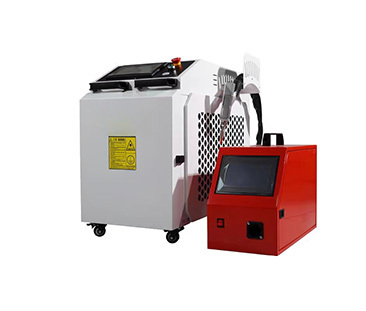
Udibo’s 100W pulsed handheld laser cleaning machine (Product Link) is specifically designed for automotive repair environments. Its compact, portable form factor fits into busy shop workflows without dedicated booths or special ventilation beyond standard fume extraction. The intuitive handheld design requires minimal training—most technicians become proficient within an hour.
From a cost perspective, while the initial investment in a laser cleaning machine is higher than a sandblasting cabinet, the operating expenses tell a different story: zero consumable costs for abrasives or chemicals, minimal maintenance, and no hazardous waste disposal fees. For a busy repair shop handling 10-15 rust removal jobs per week, payback periods under 12 months are realistic.
Additionally, Udibo offers 100W, 200W, 300W, 500W, and 1000W pulsed models and 1500W, 2000W, and 3000W continuous-wave versions—allowing shops to scale as their workload grows.
Getting Started: A Practical Path Forward
For automotive repair shop owners, parts remanufacturers, and restoration specialists considering this technology, here is a straightforward adoption roadmap:
Start with a 100W or 200W pulsed unit—sufficient for rust removal, oxide cleaning, and pre-weld surface preparation on most passenger vehicle components.
Implement basic fume extraction—a portable unit positioned near the cleaning area is typically adequate for intermittent use.
Train one technician as the in-house expert—the learning curve is gentle, and early adoption creates competitive differentiation.
Track time savings and consumable reduction—documenting ROI helps justify expansion to higher-power units as demand grows.
FAQ
Q: Will laser cleaning damage sensitive aluminum engine components?
A: No. Pulsed laser technology is specifically designed to remove contaminants without altering the underlying substrate. The energy is absorbed by rust, paint, or oxide layers, while the reflective metal surface remains unaffected.
Q: Does this technology comply with EU and North American environmental regulations?
A: Yes. Unlike chemical solvents and abrasive blasting, laser cleaning generates no hazardous waste, no toxic runoff, and no airborne silica. This aligns perfectly with tightening REACH, PFAS, and OSHA requirements across major markets.
Q: Can one machine handle both rust removal and pre-weld cleaning?
A: Absolutely. By adjusting power settings and scan patterns, the same handheld laser cleaning machine switches between heavy rust removal and fine oxide cleaning. This versatility makes it an all-in-one surface preparation tool.
Contact Information
Udibo Industrial Machinery Co., Ltd.
Suzhou Industrial Park, Jiangsu, China
Phone/WhatsApp: +86 152 5267 7152
Email: info@udibomfg.com
Website: www.udibomfg.com
© 2026 Udibo Industrial Machinery Co., Ltd. All Rights Reserved
Specialists in Laser Marking, Welding, Cleaning and Cutting Equipment
Key words:
- All
- Product Management
- News
- Introduction
- Enterprise outlets
- FAQ
- Enterprise Video
- Enterprise Atlas
Recommend News




Contact Us
Phone: +86 (China) 152-5267-7152
WhatsApp: +86 (China) 152-5267-7152
E-mail:info@udibomfg.com
Address: Building 1002 Redstar International Technology Park, Mudu Town, Wuzhong District, Suzhou City, Jiangsu Province, China