


How Portable Laser Cleaning is Redefining Mobile Industrial Maintenance in 2026
Release time:
2026-06-22
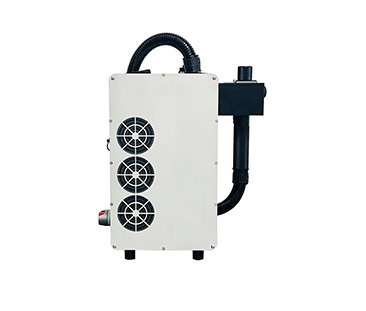
As global manufacturing pivots toward leaner, more sustainable workflows, the demand for mobile, eco-friendly surface preparation tools continues to surge. Across industries—from automotive repair to electronics assembly—the shift away from chemical solvents and manual abrasives is unmistakable. At the heart of this transformation is the compact, backpack-style laser cleaning machine, a technology once confined to fixed workstations but now fully portable. This article examines how handheld portable laser cleaning systems are bringing high-precision rust removal, oxide stripping, and contaminant extraction directly to the job site, and why this matters for workshops, service teams, and independent operators worldwide.
The Growing Trend: Cleaning Without Chemicals or Consumables
Industrial maintenance teams have long struggled with the drawbacks of traditional surface preparation: chemical baths that require hazardous waste disposal, abrasive blasting that generates harmful dust, and manual grinding that risks damaging delicate substrates. The emergence of nanosecond pulsed fiber laser cleaning technology has offered a fundamentally different path. By directing high-energy light pulses at a contaminated surface, a laser rust removal machine vaporizes oxides, grease, and coatings without touching the base material. No media, no solvents, no secondary cleanup—just a clean, ready-to-process surface. In 2026, environmental compliance and operator safety regulations are tighter than ever, making laser-based cleaning a logical choice for forward-thinking workshops. The technology is no longer experimental; it is a proven, mainstream process found in shipyards, mold repair facilities, and electronics factories worldwide. The most recent evolution is not about raw power—it is about portability. Shrinking the laser source, power supply, and control system into a form factor that one person can carry has unlocked entirely new field-service possibilities.

Real-World Applications: From Battery Production to Mold Maintenance
The practical applications for a mobile handheld laser cleaning machine are remarkably diverse. In the lithium-ion battery industry, manufacturers use precision laser cleaning to strip oxides and residues from busbars, cell contacts, and battery pack housings. This non-contact method eliminates the risk of chemical contamination that could compromise cell integrity. In automotive workshops, technicians are adopting portable laser rust removers to clean brake components, engine blocks, and chassis sections during refurbishment, avoiding the mess and disposal costs of sandblasting. Mold maintenance is another high-value application. Plastic injection molds gradually accumulate gas residues and release-agent buildup that affect part quality. A backpack pulse laser cleaner allows a single technician to carry the unit directly to the mold storage area, clean the tooling in place without disassembly or cool-down, and return it to production in minutes. For smaller operations—such as a family-run metal fabrication shop or a solo entrepreneur offering on-site restoration services—the ability to arrive at a client’s facility with a single bag containing the entire cleaning system changes the business model. These operators can now bid on jobs that were previously inaccessible due to equipment logistics.

Operational Simplicity: No Bench, No Cords, No Fatigue
What makes this new generation of fiber laser cleaning equipment especially suited to mobile work is its operational design. A system weighing approximately 13.5 kilograms in a compact, A4-paper-sized chassis can be comfortably carried using an integrated backpack harness. An onboard lithium battery provides cord-free operation for over 90 minutes, with a real-time power display so the operator always knows the remaining charge. This eliminates the hunt for power outlets in shipyards, construction sites, or outdoor storage yards. The cleaning head itself is miniaturized for single-hand use, reducing operator fatigue during extended sessions. Six selectable cleaning graphic modes and adjustable parameters allow fine-tuning for the specific task—whether removing light oxidation from aluminum or heavy rust from structural steel. The learning curve is intentionally short; operators with basic mechanical aptitude can be trained within a day and achieve consistent results. For enterprises, this means less downtime waiting for specialized technicians. For small workshops and individual operators, it means the technology is genuinely accessible, with no need for compressed air lines, dust collection systems, or chemical handling permits. Compared to traditional methods, the environmental advantage is clear: no consumable waste stream, significantly lower energy consumption, and zero chemical runoff—aligning with tightening global environmental standards.
Competitive Positioning in a Tightening Market
As competition intensifies across manufacturing and industrial services, the shops that thrive are those that deliver faster turnaround, higher quality, and traceable processes. Adopting a laser cleaning system signals capability. A mold repair shop that can clean tooling on-site rather than shipping it out gains a scheduling advantage. An auto restoration business that offers chemical-free, precision surface prep can differentiate itself in a crowded market. For entrepreneurs entering the industrial services sector, a backpack laser cleaner represents a relatively low-barrier entry point into high-value work, from historical artifact conservation to food processing equipment maintenance. The key is to select equipment that matches real workload requirements—not overpowered or underpowered, but appropriately specified with reliable after-sales support. As this technology continues to mature, the businesses and individuals who integrate it early will be best positioned to meet evolving customer expectations for speed, cleanliness, and sustainability.
FAQ
Q: What materials can a portable pulsed laser cleaning machine effectively clean?
A: It effectively removes rust, oxides, grease, paint, and surface coatings from most metals including steel, aluminum, copper, and titanium alloys, without damaging the base substrate.
Q: Is training difficult for a handheld laser cleaner?
A: No. The ergonomic design and intuitive control interface allow operators to become proficient within one day. The adjustable parameters and graphic modes simplify process setup for different tasks.
For workshops, field service teams, and independent operators exploring mobile surface preparation solutions, understanding the real-world capabilities of today's portable laser cleaning equipment is the first step toward a more efficient, sustainable operation. To discuss specifications, arrange a demonstration, or request detailed technical documentation tailored to your specific application, please reach out through the channels below.
Contact Information
Udibo Industrial Machinery Co., Ltd.
Suzhou Industrial Park, Jiangsu, China
Phone/WhatsApp: +86 152 5267 7152
Email: info@udibomfg.com
Website: www.udibomfg.com
© 2026 Udibo Industrial Machinery Co., Ltd. All Rights Reserved
Specialists in Laser Marking, Welding, Cleaning and Cutting Equipment
Key words:
- All
- Product Management
- News
- Introduction
- Enterprise outlets
- FAQ
- Enterprise Video
- Enterprise Atlas
Recommend News




Contact Us
Phone: +86 (China) 152-5267-7152
WhatsApp: +86 (China) 152-5267-7152
E-mail:info@udibomfg.com
Address: Building 1002 Redstar International Technology Park, Mudu Town, Wuzhong District, Suzhou City, Jiangsu Province, China