


Why Handheld Laser Cleaning Is Becoming the Go-To Solution for Metal Fabrication Shops
Release time:
2026-07-14
The landscape of surface preparation is shifting rapidly. Across the global metal fabrication industry, workshops are under mounting pressure to boost efficiency while adhering to stricter environmental regulations. Traditional methods like sandblasting and chemical solvents are increasingly seen as messy, costly, and non-compliant. Enter the handheld laser cleaning machine, a technology that is swiftly moving from a niche novelty to a mainstream necessity for job shops and industrial plants alike.
The landscape of surface preparation is shifting rapidly. Across the global metal fabrication industry, workshops are under mounting pressure to boost efficiency while adhering to stricter environmental regulations. Traditional methods like sandblasting and chemical solvents are increasingly seen as messy, costly, and non-compliant. Enter the handheld laser cleaning machine, a technology that is swiftly moving from a niche novelty to a mainstream necessity for job shops and industrial plants alike.
This article explores the real-world impact of laser ablation technology in the metal fabrication sector, examining how it streamlines rust removal, paint stripping, and weld preparation. We’ll move beyond the lab specs and look at genuine shop-floor applications, particularly for the small to mid-sized enterprises that form the backbone of global manufacturing.
The Technology Behind the Beam: It’s About Precision, Not Just Power
Understanding the process is simpler than many assume. Both pulse and continuous wave laser systems operate by directing a high-intensity beam onto a substrate. The contaminant layer—be it rust, oxide, or old paint—absorbs the laser energy and instantly vaporizes or detaches. The underlying metal, being highly reflective to the laser’s specific wavelength, remains completely undamaged. This is the core advantage: a selective ablation process that eliminates the risk of warping thin substrates or pitting precision surfaces. For a shop dealing with delicate stainless steel parts or heavy structural beams, this adaptability is a game-changer.
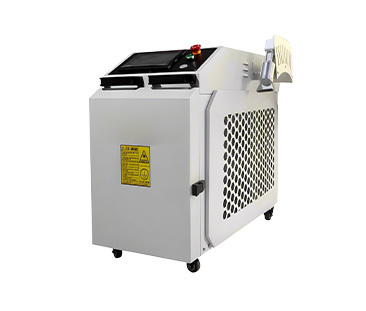
The shift from bulky fixed systems to ergonomic, portable designs has democratized this technology. A modern handheld laser cleaner integrates the laser source and cooling system into a compact, mobile cart. The operator wields a lightweight head, sweeping across surfaces at impressive speeds. With cleaning widths up to 240 mm and intuitive control panels, the learning curve is remarkably flat. We’ve seen fabricators transition from novices to proficient operators within a single day of training, a stark contrast to the apprentice model of traditional welding and abrasive blasting.
Real-World Applications: From Rusty Rails to Precision Mold Maintenance
The daily workload of a typical fabrication shop presents a constant battle against corrosion and coating removal. Let’s ground this in practical scenarios. First, consider weld preparation. Before a single arc is struck, steel must be pristine. A pulse laser cleaning machine can strip mill scale and surface rust from a weld seam in seconds, significantly reducing weld porosity and increasing joint strength. This translates directly to higher-quality output for structural welding jobs.
Second, think of mold and die maintenance. In a high-volume factory, molds accumulate baked-on grease and rubber residue. Traditional manual scrubbing with chemicals is slow and hazardous. A laser system restores these tools to their original tolerance without disassembling the press, cutting downtime by a substantial margin. The ability to clean tooling hot is another distinct advantage that speeds up production turnaround.
Third, coating removal for repainting. Whether it’s a classic car chassis or an industrial pump housing, a continuous wave laser cleaning machine can strip old coatings layer by layer without the dust plumes associated with sanding. This is especially crucial for food-grade and pharmaceutical equipment, where chemical residues are strictly forbidden. The process produces minimal secondary waste—mostly dry dust that can be extracted with a standard fume unit—making it a poster child for sustainable manufacturing.

Economic and Environmental Logic for the Modern Shop
For any small business owner, the capital investment must be justified by a swift return. A portable laser cleaning machine eliminates the recurring cost of consumables: no more blasting media, no more harsh chemicals, and drastically reduced waste disposal fees. The energy consumption is also surprisingly modest, with a typical 1500W system operating efficiently on standard industrial power. When you factor in the reduced labor hours—cleaning tasks that once took a whole shift can now be completed in a fraction of the time—the productivity boost becomes an undeniable competitive edge. It allows even a small job shop to quote on high-value, precision-clean contracts that were previously out of reach.
Future-Proofing Your Fabrication Business with Laser Versatility
The global manufacturing trend is clear: clients are demanding documented, repeatable processes that are environmentally friendly. A handheld laser rust removal system provides precisely that. By embracing this tool, smaller enterprises can compete with larger factories on quality and turnaround speed. The versatility to switch between gentle cleaning on aluminum and aggressive stripping on heavy steel—often with saved presets—makes it an invaluable asset. As the skilled labor shortage continues, a simple-to-use, automated-feeling tool like a laser is a powerful way to retain talent and standardize your product excellence. In a tightening market, the shop floor that adopts clean, fast, and adaptable technology will not just survive; it will lead.
FAQ
Frequently Asked Questions
Q: Is laser cleaning safe for the operator?
A: Yes, when proper protocols are followed. Our systems are designed with safety in mind, including an enclosed laser path and a handheld head that requires physical contact or close proximity to fire. Operators simply need to wear standard laser safety goggles. The process produces no harmful chemical fumes or flying blasting debris, making it far safer for the shop environment than many traditional methods.
Q: Can a pulse or continuous laser cleaner damage the base metal?
A: No, this is one of the key advantages. The laser parameters are tuned so that the beam is reflected by pristine metal but absorbed by contaminants. Even on thin, polished surfaces, the substrate remains untouched. This makes it ideal for cleaning engine components, aerospace parts, and high-value molds without dimensional changes.
Contact Information
For more details on how laser cleaning can optimize your workshop’s workflow, or to request a free quote and sample testing, please don’t hesitate to reach out. Our team provides comprehensive online support and training guidance.
Udibo Industrial Machinery Co., Ltd.
Suzhou Industrial Park, Jiangsu, China
Phone/WhatsApp: +86 152 5267 7152
Email: info@udibomfg.com
Website: www.udibomfg.com
© 2026 Udibo Industrial Machinery Co., Ltd. All Rights Reserved
Specialists in Laser Marking, Welding, Cleaning and Cutting Equipment
Key words:
- All
- Product Management
- News
- Introduction
- Enterprise outlets
- FAQ
- Enterprise Video
- Enterprise Atlas
Recommend News




Contact Us
Phone: +86 (China) 152-5267-7152
WhatsApp: +86 (China) 152-5267-7152
E-mail:info@udibomfg.com
Address: Building 1002 Redstar International Technology Park, Mudu Town, Wuzhong District, Suzhou City, Jiangsu Province, China