

Handheld Laser Welding Machine Transforms Automotive Repair: Precision, Speed, and the End of Panel Warping
Release time:
2026-09-16
Global collision repair shops are discovering that fiber laser welding solves the industry's oldest frustration—thin-gauge sheet metal distortion—while cutting finishing time by more than half.
Global collision repair shops are discovering that fiber laser welding solves the industry's oldest frustration—thin-gauge sheet metal distortion—while cutting finishing time by more than half.
The Repair Shop's Oldest Problem Finally Has a Solution
For decades, automotive body technicians have faced the same maddening scenario: align a replacement quarter panel, pull the MIG trigger, and watch 0.8mm sheet metal warp into an oil-canning disaster. The physics of traditional arc welding simply dumps too much thermal energy into thin substrates. Laser welding machine technology has changed this equation entirely. The automotive laser welding system market was valued at USD 1.25 billion in 2024 and is projected to reach USD 1.99 billion by 2034, growing at a 4.8% CAGR as repair shops worldwide adopt this precision technology.

Why Laser Welding Outperforms Traditional Methods
The concentrated fiber laser beam creates a heat-affected zone (HAZ) up to 80% smaller than MIG welding, which means dramatically less warping on thin panels-13. Weld speed reaches 2–4 times faster than TIG on the same joint types, and because the weld bead sits nearly flush with the base metal, many joints require zero post-weld grinding-13. Laser welding delivers joints roughly seven times longer per kWh compared to TIG welding, making it a more energy-efficient choice for shops concerned about both cost and environmental impact.
The learning curve is also significantly shorter. While TIG demands years of practice to master thin-panel work, handheld laser welders feature preset material programs and auto-focus systems that allow technicians to achieve consistent results within days, not months.

Real-World Applications in Collision Repair
Patch Panel Welding — Replacing rusted sections of quarter panels and rocker panels is core collision work. A handheld laser welder produces narrow, low-distortion butt joints on 18–22 gauge steel without burn-through. Shops report cutting patch panel weld-and-finish time by 40–60% after switching from MIG.
Classic Car Restoration — Restoration shops handling high-value vehicles cannot tolerate visible heat marks or warped panels. Fiber laser welding preserves panel geometry with an aesthetic bead that requires minimal finishing, making it ideal for concours-level work.
Frame and Structural Reinforcement — Modern laser welding machine technology provides deep penetration and consistent fusion equivalent to or exceeding TIG on structural reinforcements and bracket fabrication, at a fraction of the time.
The Udibo Solution
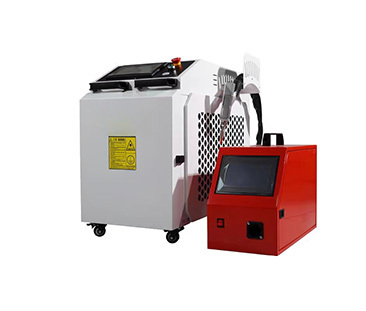
The UDUH-SCLMF-21500 Water-Cooled Handheld Laser Welding Machine delivers industrial-grade performance in a portable format. Its all-in-one design allows workstation adjustment at any time, while the handheld welding head with a 10-meter transmission fiber breaks through traditional workstation limitations. The continuous laser mode produces smooth weld transitions with no fish-scale pattern, and the small weld surface eliminates secondary grinding—reducing labor and time costs significantly.
The machine welds stainless steel, carbon steel, copper, aluminum, and numerous alloys. With 1000W–2000W power options and a 0.5–6mm welding thickness range, it adapts from delicate cosmetic panels to thicker structural components.
Industry Insight for Small and Mid-Sized Shops
The growing affordability of handheld laser welders means the technology is no longer restricted to large manufacturing plants. Equipment costs have come down to be on par with traditional welding equipment, making this investment practical for independent body shops, restoration garages, and mobile repair services alike.
Shops that adopt laser welding now position themselves ahead of the curve. As vehicle manufacturers increasingly use laser-welded joints in production, repair facilities equipped with matching technology will have a competitive advantage in both capability and customer confidence.
For more details and a free quote, please visit our official website or contact us via email.
Frequently Asked Questions
Q: Can the handheld laser welder weld aluminum body panels?
A: Yes. The machine handles aluminum, stainless steel, carbon steel, copper, and many alloys. The low heat input is particularly beneficial for aluminum, which is prone to warping with traditional welding methods.
Q: How long does operator training take?
A: Most technicians achieve consistent, production-quality results within 1–2 days. The preset material programs and auto-focus system significantly reduce the skill barrier.
Q: Does the water-cooled system require special maintenance?
A: The water-cooling system requires standard maintenance—checking coolant levels and ensuring proper ventilation. It provides stable performance during extended operation without the downtime associated with air-cooled systems in high-duty-cycle environments.
Contact Information
Udibo Industrial Machinery Co., Ltd.
Suzhou Industrial Park, Jiangsu, China
Phone/WhatsApp: +86 152 5267 7152
Email: info@udibomfg.com
Website: www.udibomfg.com
© 2026 Udibo Industrial Machinery Co., Ltd. All Rights Reserved
Specialists in Laser Marking, Welding, Cleaning and Cutting Equipment
Key words:
- All
- Product Management
- News
- Introduction
- Enterprise outlets
- FAQ
- Enterprise Video
- Enterprise Atlas
Recommend News



Contact Us
Phone: +86 (China) 152-5267-7152
WhatsApp: +86 (China) 152-5267-7152
E-mail:info@udibomfg.com
Address: Building 1002 Redstar International Technology Park, Mudu Town, Wuzhong District, Suzhou City, Jiangsu Province, China