

Trolley Type Fiber Laser Cleaning Machine Rust & Paint Remover
Release time:
2026-05-19
For decades, automotive repair shops have relied on chemical strippers, abrasive sandblasting, grinding discs, and wire brushes to remove rust, paint, grease, and surface contaminants from metal components. These methods work, but they come with significant drawbacks. Chemicals generate hazardous waste, require special disposal procedures, and expose technicians to toxic fumes. Sandblasting damages underlying metal surfaces, creates airborne dust that settles throughout the workshop, and requires extensive masking of adjacent areas. Grinding discs remove material unevenly, leaving scratches that need additional finishing. Across Europe and North America, stricter environmental regulations are making these traditional methods increasingly expensive and legally complicated to maintain. As a direct response, a growing number of independent repair shops, restoration garages, and automotive parts remanufacturers are adopting pulsed laser cleaning technology as a cleaner, faster, and more cost-effective alternative.
For decades, automotive repair shops have relied on chemical strippers, abrasive sandblasting, grinding discs, and wire brushes to remove rust, paint, grease, and surface contaminants from metal components. These methods work, but they come with significant drawbacks. Chemicals generate hazardous waste, require special disposal procedures, and expose technicians to toxic fumes. Sandblasting damages underlying metal surfaces, creates airborne dust that settles throughout the workshop, and requires extensive masking of adjacent areas. Grinding discs remove material unevenly, leaving scratches that need additional finishing. Across Europe and North America, stricter environmental regulations are making these traditional methods increasingly expensive and legally complicated to maintain. As a direct response, a growing number of independent repair shops, restoration garages, and automotive parts remanufacturers are adopting pulsed laser cleaning technology as a cleaner, faster, and more cost-effective alternative.
How Pulsed Laser Cleaning Actually Works in an Automotive Environment
Understanding the technology helps explain its growing popularity. A pulsed fiber laser generates short, intense bursts of energy that are directed onto a contaminated surface. When the laser pulse hits a layer of rust, paint, or oil, the contaminant absorbs the energy almost instantly. This rapid heating causes the contaminant to vaporize or turn into a fine dust that can be extracted with a simple vacuum system. The key advantage is that the laser energy does not affect the underlying metal because the pulse duration is too short for heat to transfer into the substrate. The result is a clean, uncontaminated surface with no residue, no chemical film, and no mechanical damage. For automotive applications, this means technicians can prepare a fender for repainting, clean an engine block for rebuilding, or strip an entire chassis without worrying about warping, pitting, or weakening the base material.

Practical Applications Auto Repair Shops Are Implementing Today
The most immediate application for a vertical pulsed laser cleaner in an automotive setting is rust removal from structural and cosmetic components. Brake calipers, suspension arms, subframes, and axle housings all develop surface rust over time. Rather than spending hours with a wire brush or sending parts out for sandblasting, a technician can clean these components in minutes directly on the shop floor. The laser reaches into pitted areas that abrasive methods cannot access, leaving a uniformly clean surface ready for painting or reassembly.
Paint stripping represents another high-value application. Restoring classic cars often requires removing multiple layers of old paint from body panels without damaging the original sheet metal underneath. Chemical strippers can seep into seams and cause long-term corrosion issues. Sandblasting risks warping thin panels. A pulsed laser cleaner removes paint layer by layer with complete control, stopping precisely when bare metal is exposed. Restoration shops report reducing paint stripping time by 60% to 70% compared to chemical methods, with no hazardous waste disposal costs.
Engine and transmission rebuilders are using laser cleaning to remove baked-on carbon deposits, old gasket residue, and oxidation from aluminum housings and cylinder heads. Traditional methods like soaking in chemical baths take hours or days and require handling toxic solutions. Laser cleaning accomplishes the same result in minutes, with no chemicals, no waiting, and no risk of damaging soft aluminum surfaces. The same principle applies to cleaning weld seams before inspection or coating, and removing undercoating from floor pans without heating the shop with torches or creating a sticky mess with scrapers.
Cost and Operational Advantages for Small and Medium Shops
For a typical 2- to 10-bay automotive repair facility, the financial case for laser cleaning equipment has become compelling. Consumable costs are virtually eliminated. No more purchasing chemical strippers, abrasive media, grinding discs, or wire wheels. The laser’s only ongoing requirement is electrical power and occasional lens cleaning. Labor efficiency improves dramatically because cleaning happens in minutes rather than hours. A job that might occupy a technician for an entire afternoon using conventional methods can be completed during a coffee break with a handheld laser cleaning system.
Safety and regulatory compliance also favor laser technology. Chemical strippers containing methylene chloride or other hazardous solvents face increasing restrictions under regulations like the European Union’s REACH program and the United States’ EPA Toxic Substances Control Act. Disposal costs for hazardous waste continue rising. Laser cleaning generates no chemical waste, no spent abrasive media, and no airborne silica dust. The only byproduct is a small amount of vaporized contaminant captured by the integrated dust extraction system. Technicians avoid skin contact with caustic chemicals and respiratory exposure to abrasive dust. This creates a healthier work environment and eliminates regulatory paperwork.

Why Now Is the Right Time for Automotive Shops to Adopt Laser Cleaning
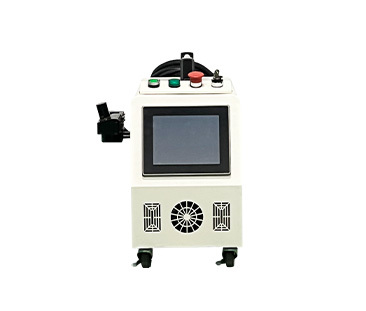
The technology has matured substantially in recent years. Early laser cleaning systems were large, expensive, and required dedicated operator training. Modern vertical pulsed laser cleaners like the Udibo model are compact enough to occupy minimal floor space in a busy shop. Cooling requirements are simple. Operation is straightforward enough that a technician can achieve proficiency after a few hours of guided practice. The learning curve focuses on adjusting pulse frequency and scanning speed for different contaminants and base materials, not on mastering complex machinery.
For shop owners evaluating the investment, the combination of labor savings, consumable elimination, and regulatory risk reduction typically generates a return on investment within 12 to 18 months in medium-volume automotive repair settings. Shops that adopt early also gain a marketing advantage. Customers increasingly prefer environmentally responsible repair methods. Advertising chemical-free, dust-free, non-abrasive laser cleaning differentiates a shop from competitors still using outdated, dirty processes.
A Practical Suggestion for Shop Owners Considering Laser Cleaning
If you operate an auto body shop, restoration garage, engine rebuilding service, or any automotive repair business that regularly removes rust, paint, or surface contamination, now is an excellent time to test pulsed laser cleaning technology. Start with a single application that creates the most recurring labor cost in your current workflow. Measure the time difference between your existing method and a laser cleaning demonstration. Calculate the consumable savings. Evaluate the improvement in surface quality. For most shops, the numbers make the decision straightforward. Handheld and vertical laser cleaning systems from manufacturers like Udibo offer an accessible entry point with practical power levels for automotive applications. The transition from chemicals and abrasives to light-based cleaning represents a genuine operational upgrade that improves both your bottom line and your working environment.
Contact Information
Udibo Industrial Machinery Co., Ltd.
Suzhou Industrial Park, Jiangsu, China
Phone/WhatsApp: +86 152 5267 7152
Email: info@udibomfg.com
Website: www.udibomfg.com
© 2026 Udibo Industrial Machinery Co., Ltd. All Rights Reserved
Specialists in Laser Marking, Welding, Cleaning and Cutting Equipment
Key words:
- All
- Product Management
- News
- Introduction
- Enterprise outlets
- FAQ
- Enterprise Video
- Enterprise Atlas
Recommend News




Contact Us
Phone: +86 (China) 152-5267-7152
WhatsApp: +86 (China) 152-5267-7152
E-mail:info@udibomfg.com
Address: Building 1002 Redstar International Technology Park, Mudu Town, Wuzhong District, Suzhou City, Jiangsu Province, China