

Mold Repair Evolved: How Laser Welding Technology is Extending Tool Life for Small Shops
Release time:
2026-05-26
For small to medium-sized mold repair shops and even freelance toolmakers, the cost of replacing worn or damaged molds is a constant financial strain. Traditional repair methods, like TIG welding, often introduce excessive heat, causing warping and requiring extensive post-processing. However, a shift is happening. Affordable, compact, and user-friendly mold repair laser welding machines are now making high-precision repairs accessible, helping businesses drastically extend tool life while reducing downtime and material costs.
For small to medium-sized mold repair shops and even freelance toolmakers, the cost of replacing worn or damaged molds is a constant financial strain. Traditional repair methods, like TIG welding, often introduce excessive heat, causing warping and requiring extensive post-processing. However, a shift is happening. Affordable, compact, and user-friendly mold repair laser welding machines are now making high-precision repairs accessible, helping businesses drastically extend tool life while reducing downtime and material costs.
The Industry Shift: From Rework to Precision Restoration
The global manufacturing sector is demanding faster turnaround and higher quality, placing immense pressure on mold maintenance. This is where laser technology provides a clear advantage. Unlike conventional arc welding, a laser welding machine generates an extremely concentrated heat source, creating a microscopic heat-affected zone (HAZ). This means you can repair a sharp corner, fill a pit, or rebuild a worn edge on a complex mold cavity without worrying about thermal distortion or damaging nearby delicate surfaces.
For the small workshop owner, this evolution means jobs that once required sending the mold out for expensive, slow EDM or TIG work can now be done in-house. The learning curve is also gentler. Modern systems offer precise control over pulse width and frequency, enabling operators to “cold weld” and achieve a bond so fine that the repair is often invisible to the naked eye.

Practical Application: Breathing New Life into a Die-Cast Mold
Consider a common scenario in an automotive parts supplier. A die-cast mold for an aluminum housing shows signs of edge chipping and micro-cracks after 50,000 cycles. Scrapping this mold would cost thousands and cause weeks of production delay.
Using a fiber laser welding machine like the Udibo UDMJ-WY200, the technician first cleans the affected area. With the built-in CCD microscope vision system, they can see the defect magnified on a screen. Using a 0.3mm welding wire and precisely tuned parameters (pulse width under 20ms, spot size 0.2mm), they then deposit material layer by layer. The result is a perfect, void-free rebuild of the original geometry. After a quick post-weld polish, the mold is back in service, capable of running for another 50,000 cycles or more. This single repair can yield a return on investment (ROI) many times over, a critical factor for any competitive workshop.
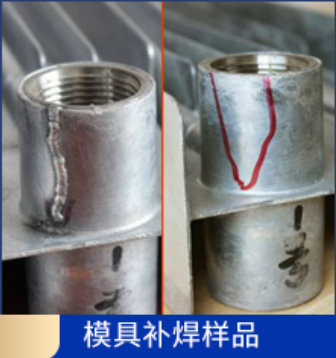
Image Alt Attribute: Before and after comparison of mold surface repair using a portable laser welder for mold
Why Udibo’s Solution Resonates with Modern Toolmakers
At Udibo, we design our automatic laser welding machine solutions with the reality of the small to mid-size enterprise in mind. Our mold repair laser welding machine, model UDMJ-WY200, isn't just a piece of heavy industrial equipment; it's a practical tool for the skilled craftsman.
Unmatched Precision: With a spot adjustment range of 0.1-0.3mm and a CCD microscope for 20x magnification, you get surgical accuracy on every job.
Simplicity & Speed: The intuitive interface requires only a few days of training to master. You’re not just a welder; you’re a restoration expert.
Low Cost of Entry & Operation: Consumables are limited to welding wire, argon gas, and protective lenses. Its water-cooled system ensures stable, long-running performance without high electricity bills.
Eco-Friendly Process: There are no harsh chemicals, no heavy slag, and minimal fumes, making it a clean, safe addition to any workshop floor.
Seizing the Competitive Advantage
The manufacturing landscape is becoming more competitive by the day. For mold repair shops, small tool rooms, or even individual entrepreneurs, the ability to offer a rapid, high-quality, and cost-effective mold restoration service is a massive differentiator. By adopting laser welding technology, you are not just fixing tools; you are guaranteeing uptime for your clients, reducing their production costs, and building a reputation for precision.
Investing in a dedicated mold laser welding machine is a strategic move to elevate your service quality and secure long-term client loyalty. It’s about working smarter, not harder.
Frequently Asked Questions (FAQ)
Q: Is a laser welding machine difficult to operate for someone with only traditional TIG welding experience?
A: Not at all. In fact, skilled TIG welders transition very quickly. The laser system provides more control and less heat stress. The CCD vision system makes it easier to see the work area, and the learning curve is primarily about setting the right parameters, which Udibo provides comprehensive training for.
Q: Can this machine work on different types of mold steel, like hardened steel or aluminum?
A: Yes. The 1064nm YAG laser is highly effective on various metals, including tool steel, stainless steel, aluminum, and copper alloys, which are common in mold making. The adjustable pulse width allows you to tailor the energy input for different materials without cracking.
Q: The website mentions this is a "flying fiber" model, but the specs look like a pulsed YAG welder. Can you clarify?
A: The product name often highlights the flexible fiber-optic light delivery system ("flying fiber"), which allows for easy, handheld or fixture-mounted operation. The core technology is a pulsed Nd:YAG laser, which is the industry gold standard for precision mold repair due to its stable, high-energy pulses.
Q: How does this compare to using a traditional laser cleaning machine for pre-weld prep?
A: They are complementary tools. A laser cleaning machine is excellent for removing rust, oil, or coatings from the mold surface before welding, ensuring a clean, contamination-free weld pool. Our machine focuses on the welding and material deposition itself. For a fully optimized workflow, having both a cleaner and a welder is ideal.
Conclusion & Next Steps
The era of scrapping expensive molds due to minor damage is over. Laser technology has leveled the playing field, giving small shops the power to compete with industrial giants. Embrace this change, enhance your capabilities, and secure your business's future.
Contact Information
Udibo Industrial Machinery Co., Ltd.
Suzhou Industrial Park, Jiangsu, China
Phone/WhatsApp: +86 152 5267 7152
Email: info@udibomfg.com
Website: www.udibomfg.com
For more details and a free quote, please visit our official website or contact us via email. We are here to help you find the perfect solution for your workshop.
© 2026 Udibo Industrial Machinery Co., Ltd. All Rights Reserved
Specialists in Laser Marking, Welding, Cleaning and Cutting Equipment
Key words:
- All
- Product Management
- News
- Introduction
- Enterprise outlets
- FAQ
- Enterprise Video
- Enterprise Atlas
Recommend News




Contact Us
Phone: +86 (China) 152-5267-7152
WhatsApp: +86 (China) 152-5267-7152
E-mail:info@udibomfg.com
Address: Building 1002 Redstar International Technology Park, Mudu Town, Wuzhong District, Suzhou City, Jiangsu Province, China